


 English
 Spanish
 French
 German
 Italian
 Chinese (Simplified)
 Japanese
 Korean
 Arabic
 Portuguese

 Send Inquiry
Dock Leveler
Price 230000 INR/ Unit
MOQ : 1 Unit
Dock Leveler Specification
- Usage
- Industrial
- Condition
- New
- Feature
- High efficiency, Rust proof
- Warranty
- Yes
- Attributes
- Strong
Dock Leveler Trade Information
- Minimum Order Quantity
- 1 Unit
- Supply Ability
- 10 Units Per Day
- Delivery Time
- 10 Days
- Sample Available
- Yes
- Sample Policy
- Contact us for information regarding our sample policy
- Main Domestic Market
- Gujarat
Dock Leveler About
A dock leveler is a piece of equipment used in loading docks to bridge the gap between a dock and a truck or trailer, facilitating the smooth and efficient transfer of goods. Dock levelers ensure a safe and stable platform for forklifts, pallet jacks, and other material handling equipment to move between the dock and the vehicle. Here are the key features and components of a dock leveler:
Key Features
- Adjustable Height: Designed to compensate for the height differences between the dock and the truck bed. The leveler can be adjusted up or down to align with various truck heights.
- Load Capacity: Typically ranges from 10,000 to 40,000 kg (22,000 to 88,000 lbs) or more, depending on the model and application.
- Durability: Constructed from robust materials such as heavy-duty steel to withstand constant use and heavy loads. A dock leveler is a piece of equipment used in loading docks to bridge the gap between a dock and a truck or trailer, facilitating the smooth and efficient transfer of goods. Dock levelers ensure a safe and stable platform for forklifts, pallet jacks, and other material handling equipment to move between the dock and the vehicle. Here are the key features and components of a dock leveler:
Types of Dock Levelers
- Mechanical Dock Leveler: Operated manually using a pull chain or lever to release the leveler and position it onto the truck bed. It relies on a system of springs to assist in raising and lowering the platform.
- Hydraulic Dock Leveler: Uses a hydraulic system powered by an electric motor to raise and lower the platform and lip. This type is easier to operate and requires less physical effort than mechanical models.
- Pneumatic Dock Leveler: Uses an air-powered system to lift the platform and lip. It is operated by inflating air bags or bladders, offering smooth and reliable operation with minimal maintenance.
- Edge-of-Dock Leveler: A smaller, more compact leveler installed at the edge of the dock, suitable for lighter loads and smaller height differences between the dock and truck bed.
Advantages
- Efficiency: Enhances loading and unloading efficiency by providing a smooth transition between the dock and truck bed.
- Safety: Reduces the risk of accidents and injuries by providing a stable and secure platform for material handling equipment.
- Versatility: Accommodates various truck heights and types, making it suitable for a wide range of applications.
- Durability: Built to withstand heavy use and harsh conditions, ensuring long-term performance and reliability.
- Ease of Use: Available in manual, hydraulic, and pneumatic options to suit different operational preferences and requirements.
Applications
- Warehousing: Facilitates the efficient transfer of goods between trucks and warehouse storage areas.
- Manufacturing: Assists in the loading and unloading of raw materials and finished products.
- Distribution Centers: Enhances the speed and safety of goods handling in high-traffic loading dock areas.
- Retail: Supports the receipt and shipment of products in retail distribution hubs.
- Cold Storage: Used in refrigerated and frozen goods facilities, with models designed to withstand low temperatures.
Key Components
- Platform: The main surface of the dock leveler that adjusts to bridge the gap between the dock and truck bed.
- Lip: The extendable section of the platform that rests on the truck bed, ensuring a smooth transition.
- Actuation System: The mechanism (manual, hydraulic, or pneumatic) that raises and lowers the platform and lip.
- Safety Legs: Prevent the leveler from descending too quickly or collapsing under load.
- Control Panel: For hydraulic and pneumatic models, includes buttons or switches to operate the leveler.
- Hinges and Springs: For mechanical models, assist in the movement and positioning of the platform and lip.
Dock levelers are critical components in modern loading docks, offering a combination of strength, flexibility, and safety to streamline material handling operations in various industries.
Equipped with safety mechanisms such as side guards, emergency stop buttons, anti-slip surfaces, and lip keepers to prevent accidental disengagement.
Specification
|
Function Type |
Automatic |
|
Equipment Type |
Dock Leveler |
|
Capacity |
10000 Kg |
|
Material |
Steel |
|
Operation |
Hydraulic |
|
Platform Size (LxW) |
2720 x 2130 mm |
Heavy-Duty Industrial Design
Designed specifically for demanding warehouse and factory environments, this dock leveler boasts a formidable 10,000 kg load capacity. With sturdy materials and a rust-proof finish, it stands up to heavy use and variable weather, ensuring enduring functionality and safety for both goods and operators.
Manual Operation with High Efficiency
The manual transmission system allows for smooth, controlled operation during loading and unloading. By simplifying the adjustment process, the dock leveler helps optimize workflow, saving time and boosting overall productivity in busy industrial settings.
Built-in Warranty and Reliable Support
Each dock leveler is covered by a robust warranty, underscoring our commitment as a trusted manufacturer and supplier in India. Customers can expect comprehensive support and after-sales service to address any queries or concerns related to installation and performance.
FAQ's of Dock Leveler:
Q: How do you operate the manual dock leveler?
A: The dock leveler operates through a manual transmission lever system. Simply follow the included user instructions to raise or lower the platform to the desired height, ensuring safe transfer between the dock and vehicle.Q: What are the key benefits of using this industrial dock leveler?
A: Key benefits include its high load capacity (10,000 kg), rust-proof and robust construction for long-term use, ease of manual adjustment, and a warranty for added assurance, making it suitable for challenging industrial conditions.Q: When should you use a dock leveler in your facility?
A: Use the dock leveler whenever there is a need to bridge the height gap between a loading dock and transport vehicles during loading and unloading processes, ensuring efficient and safe movement of goods.Q: Where is this dock leveler manufactured and supplied?
A: This dock leveler is manufactured and supplied in India by a reputable producer specializing in industrial loading solutions. Supply and support are available nationwide.Q: What process should be followed for installation?
A: Installation should be conducted according to the manufacturer's instructions, typically involving anchoring the unit to the dock platform and connecting the manual lever system. Professional installation is recommended for best results.Q: How does the dock leveler's rust-proof feature enhance its usage?
A: The rust-proof design dramatically increases longevity by preventing corrosion, especially in outdoor or humid environments, thereby maintaining high efficiency and reducing maintenance frequency.Q: What warranty coverage is provided with this dock leveler?
A: A comprehensive warranty is included, providing coverage for defects in material or workmanship. This gives buyers security and confidence in their purchase and ongoing usage.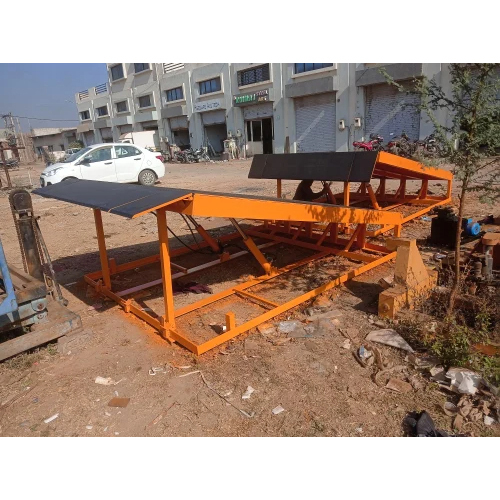
Tell us about your requirement

Price:
Quantity
Select Unit
- 50
- 100
- 200
- 250
- 500
- 1000+
Additional detail
Mobile number
Email


Contact us

- 38, Shyamved Ind. Estate, Opp. Gamthi hotel, Near Nana Chiloda Circle,Ahmedabad - 382415, Gujarat, India
- Phone : 08045812020
Dakshesh Engineers
GST : 24BBPPT1762H1ZB
GST : 24BBPPT1762H1ZB

- Mr Prabhat
- Mobile : 08045812020
-
 Send Inquiry
 Send Inquiry
 Send Inquiry
 Send SMS
 Call Me Free
Dakshesh Engineers
All Rights Reserved.(Terms of Use)
Developed and Managed by Infocom Network Private Limited.
Developed and Managed by Infocom Network Private Limited.

